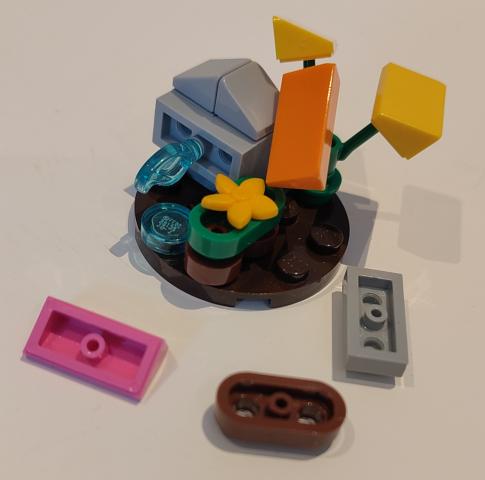
Are these also considered non-functional geometry
RE: Are these also considered non-functional geometry
Yesterday, 10:46 (This post was last modified: Yesterday, 10:48 by Peter Grass.)
Although they are compatible with regular pin holes on other parts they are there to reduce plastic shrinkage as the part cools out of the mould so aren't modelled. This sort of stuff is done to improve the clutch power of the bottom of parts. This is also why older versions of the parts don't have them. Also since there is the hole that part can flex more when you are taking the parts apart so they last longer.
If you really want them in the parts then use the lego builder version of parts which do have them or add them manually to the existing ldraw models with ldparteditor.


(Yesterday, 10:46)Peter Grass Wrote: Although they are compatible with regular pin holes on other parts they are there to reduce plastic shrinkage as the part cools out of the mould so aren't modelled. This sort of stuff is done to improve the clutch power of the bottom of parts. This is also why older versions of the parts don't have them. Also since there is the hole that part can flex more when you are taking the parts apart so they last longer.
If you really want them in the parts then use the lego builder version of parts which do have them or add them manually to the existing ldraw models with ldparteditor.
Thanks for the explanation.
How do we know when something is done improve things like "clutch power of bottom parts" and not a functional choice?
I'm curious, but fair enough if this is just something obvious if you are a building engineer or something like it - which I'm obviously not

What is the "lego builder version of parts"?
(10 hours ago)Jacob Emcken Wrote: How do we know when something is done improve things like "clutch power of bottom parts" and not a functional choice?
I'm curious, but fair enough if this is just something obvious if you are a building engineer or something like it - which I'm obviously not
To follow on to this question, what happens when geometry that was originally non-functional takes on a modeling function? With the increasing use of parts in unconventional ways as, say, greebling or architectural detailing, sometimes this new function is purely aesthetic, but no less of a contribution to the model. (For an example, see the underside of part 3024 used as ornamentation on set 10197 Fire Brigade.)
I would like to see the ability to include this kind of detail as a sort of user-selectable add-on to the LDraw language. Just as we've always had lo-res primitives, to be used under fast-draw settings in LDraw viewers, we could have a category of primitives that display higher detail (like these hollow under-studs) only when the viewer is configured to display them, such as with a meta-command applied to single lines, or blocks of code.
« Next Oldest | Next Newest »
Users browsing this thread: 1 Guest(s)